Travel
The personal item: a bag that fits under the seat, what two airlines say and which bags pass
A carry-on is a box the airline measures. A personal item is a bag that has to disappear under the seat in front of you, and the airlines describe it in words more than in numbers. Here is what two of them say, quoted, the one number that exists, how a laptop tote and a backpack purse measure up, and a table of every Missnine bag against it.
14 minute read · sources read 4 September 2026
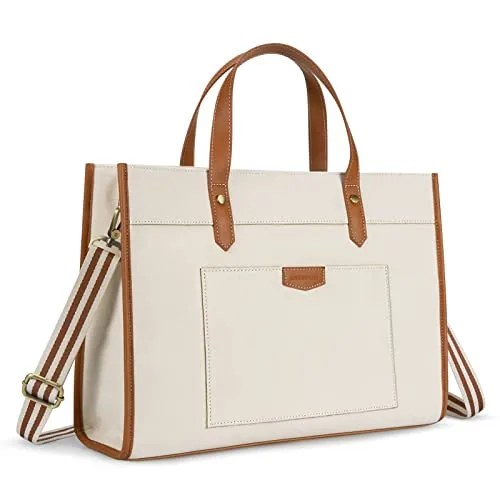
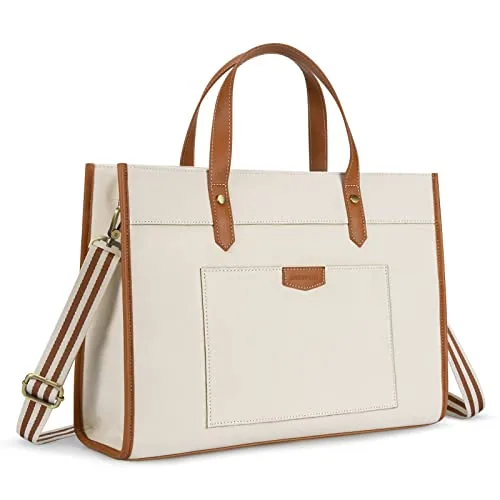
Canvas Laptop Tote, 15.6 inch, Brown and Beige
canvas · 15.7 × 5.5 × 11.8 in · 15.6" laptop
4.5 out of 5 from 3,415 ratings
$10.85
Available in 2 colours

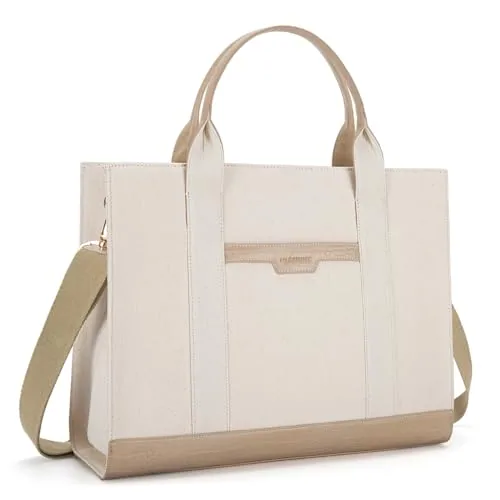
Canvas Laptop Tote, 15.6 inch III, Classic Light Khaki
canvas · 16.1 × 5.5 × 12.2 in · 15.6" laptop
4.5 out of 5 from 3,415 ratings
$12.99
Available in 2 colours
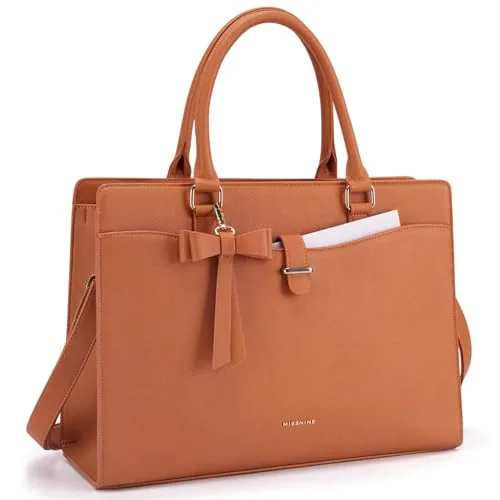
Vegan Leather Laptop Tote, 15.6 inch, Bow Brown
vegan leather · 16.1 × 5.5 × 11.8 in · 15.6" laptop
4.6 out of 5 from 1,080 ratings
$31.99
One colourway
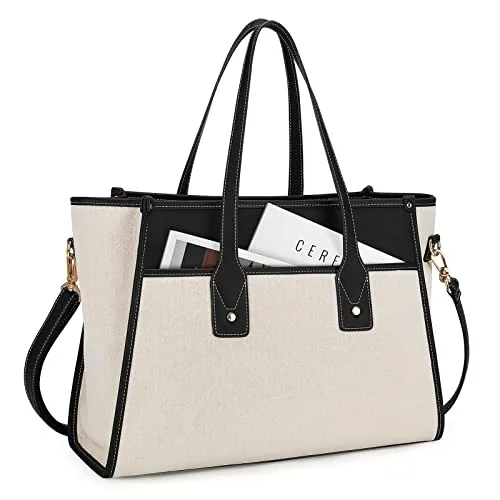
Canvas Laptop Tote, 15.6 inch II, Black and Beige
canvas · 16.1 × 5.1 × 11.8 in · 15.6" laptop
4.6 out of 5 from 1,066 ratings
$8.22
One colourway
Two bags, two rules
Every large United States airline lets a passenger board with two things: a carry-on that goes in the overhead bin and a personal item that goes under the seat. The carry-on has a number everybody knows, twenty-two by fourteen by nine inches on most carriers. The personal item is the bag this guide is about, and it is described differently by every airline.
Delta describes it by example rather than by inches:
Each passenger flying with Delta can bring 1 carry-on bag and 1 personal item free of charge (such as a purse, laptop bag or item of similar size that will fit underneath the seat in front of you).Delta Air Lines, Carry-On Baggage, read 4 September 2026
A purse, a laptop bag, or something of similar size that fits under the seat. That is the whole test, and it is a test of the seat, so the same page adds a line for the smaller aircraft:
Personal items must be able to fit securely under the seat in front of the passenger or overhead bins.Delta Air Lines, Carry-On Baggage, read 4 September 2026
American Airlines gives the number that Delta does not:
Your personal item like a purse or small handbag must fit under the seat in front of you. Dimensions should not exceed 18 x 14 x 8 inches (45 x 35 x 20 cm).American Airlines, Carry-on bags and size limits, read 4 September 2026
Eighteen by fourteen by eight is the working number for this guide, because it is the strictest one written down by a major carrier, and a bag that passes it passes the seat on most aircraft. A bag that fails it might still fit under a wide seat, and that is a bet the gate agent settles.
The Missnine range against 18 × 14 × 8
Counted from the catalogue at the last update, using the maker's length, width and height. 48 of the 64 bags with a size sit inside the number on all three sides.
| Bench | Bags with inches | Inside 18 × 14 × 8 | With a laptop sleeve |
|---|---|---|---|
| Clear & Stadium Bags | 29 | 21 | 1 |
| Laptop Totes & Work Bags | 7 | 7 | 7 |
| Backpack Purses | 8 | 0 | 4 |
| Crossbody & Sling Bags | 8 | 8 | 0 |
| Tote Bags | 2 | 2 | 2 |
| Hobo & Shoulder Bags | 10 | 10 | 0 |
The whole range is a personal-item range by size. The question is not whether the bag fits under the seat but whether what you need fits in the bag, and the laptop column answers half of it.
Missnine laptop totes, the personal item with the laptop inside
Canvas Laptop Tote, 15.6 inch, Brown and Beige
canvas · 15.7 × 5.5 × 11.8 in · 15.6" laptop
4.5 out of 5 from 3,415 ratings
$10.85
Available in 2 colours
Canvas Laptop Tote, 15.6 inch III, Classic Light Khaki
canvas · 16.1 × 5.5 × 12.2 in · 15.6" laptop
4.5 out of 5 from 3,415 ratings
$12.99
Available in 2 colours
Vegan Leather Laptop Tote, 15.6 inch, Bow Brown
vegan leather · 16.1 × 5.5 × 11.8 in · 15.6" laptop
4.6 out of 5 from 1,080 ratings
$31.99
One colourway
Canvas Laptop Tote, 15.6 inch II, Black and Beige
canvas · 16.1 × 5.1 × 11.8 in · 15.6" laptop
4.6 out of 5 from 1,066 ratings
$8.22
One colourway
The laptop is the decision
The personal item is where the laptop travels. The carry-on goes in the bin, and the bin is where a laptop gets sat on by somebody's coat. A laptop tote with a padded sleeve is the personal item that keeps the laptop under your own feet, and the sleeve size is the number to check against the screen.
The Missnine laptop totes take a 15.6 inch laptop, which means a 15.6 inch screen measured corner to corner and the body around it. A 16 inch laptop does not fit. A 14 inch fits with a sleeve to spare. The convertible backpack purses take a 13 inch laptop. The page prints the size the maker gives, and the table below lists every bag with a sleeve.
Every Missnine bag with a laptop sleeve
The laptop size and the outside inches are the maker's. Weight is the bag empty.
| Bag | Laptop up to | Length × width × height | Weight, empty | Price |
|---|---|---|---|---|
| Canvas Laptop Tote, 15.6 inch | 15.6 in | 15.7 × 5.5 × 11.8 in | 1.1 lb | $10.85 |
| Quilted Tote Bag, 15.6 inch laptop | 15.6 in | 15.3 × 6.7 × 12.2 in | n/a | $7.71 |
| Convertible Laptop Tote, 15.6 inch | 15.6 in | 16.7 × 7.1 × 13 in | n/a | $29.99 |
| Canvas Laptop Tote, 15.6 inch II | 15.6 in | 16.1 × 5.1 × 11.8 in | 1.98 lb | $8.22 |
| Canvas Laptop Tote, 15.6 inch III | 15.6 in | 16.1 × 5.5 × 12.2 in | n/a | $12.99 |
| Vegan Leather Laptop Tote, 15.6 inch, with pouch | 15.6 in | 15.4 × 5.5 × 11.4 in | 2.62 lb | $14.24 |
| Canvas Laptop Tote, 15.6 inch, with pouch | 15.6 in | 16.1 × 5.5 × 12.2 in | 1.98 lb | $35.99 |
| Vegan Leather Laptop Tote, 15.6 inch | 15.6 in | 16.1 × 5.5 × 11.8 in | 2.42 lb | $31.99 |
| Vegan Leather Tote Bag, 14 inch laptop | 14 in | 11.4 × 5.1 × 11 in | 1.54 lb | $19.99 |
| Convertible Vegan Leather Backpack Purse, 13 inch laptop | 13 in | 5.1 × 12 × 14 in | 1.87 lb | $31.99 |
| Convertible Vegan Leather Backpack Purse, 13 inch laptop II | 13 in | 5.5 × 10.5 × 14 in | 2.32 lb | $23.99 |
| Convertible Vegan Leather Backpack Purse, 13 inch laptop III | 13 in | 5.1 × 12 × 14.4 in | n/a | $13.99 |
Every bag on this list sits inside the 18 by 14 by 8 number on the outside. The weight column is the one to read twice: add three or four pounds of laptop and charger to it, and that is what hangs from the shoulder through the terminal.
Under the seat, in practice
The space under a seat is not a box. It is a slot with a bar across the back, an entertainment box on one side on many aircraft, and a height that changes with the seat pitch. A soft bag fits it better than a stiff one, and a bag with a flat bottom slides in where a round-bottomed hobo has to be pushed.
Three things make a bag work as a personal item beyond the numbers. A top zip, so nothing spills when the bag is pushed in on its side. A handle on the top, so it comes out again without a search. And a weight under two pounds empty, because the bag comes out at every stop and goes on the shoulder for the walk between gates.
The width, eight inches on the American Airlines number, is the one that a stuffed bag breaks first. A tote packed with a laptop, a charger, a sweater and a bottle bulges past eight easily. The inches on the page are the bag empty; pack it and measure it once before the first flight.
Missnine backpack purses, the personal item on two straps
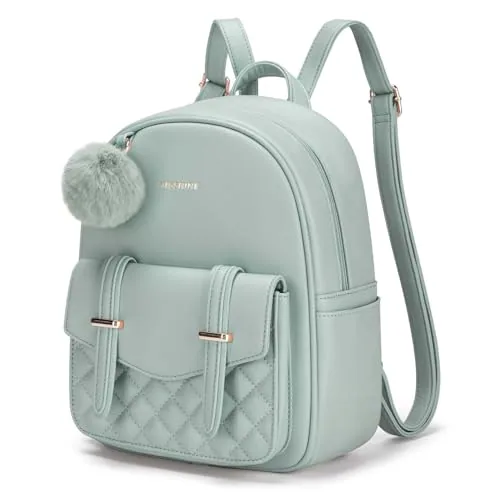
Vegan Leather Backpack Purse, pom-pom, Green
vegan leather · 3.9 × 8.6 × 11 in
4.7 out of 5 from 831 ratings
$23.99
One colourway
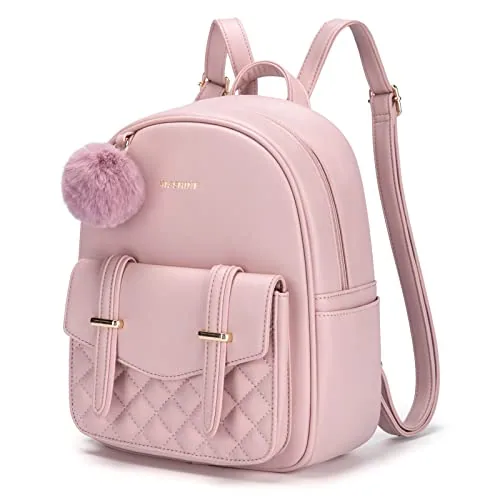
Vegan Leather Backpack Purse, pom-pom II, Pink
vegan leather · 3.9 × 8.6 × 11 in
4.7 out of 5 from 831 ratings
$23.99
One colourway
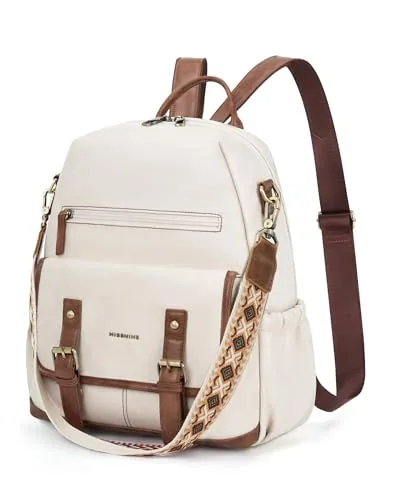
Convertible Vegan Leather Backpack Purse, 13 inch laptop, Beige
vegan leather · 5.1 × 12 × 14 in · 13" laptop
4.3 out of 5 from 355 ratings
$31.99
Available in 2 colours
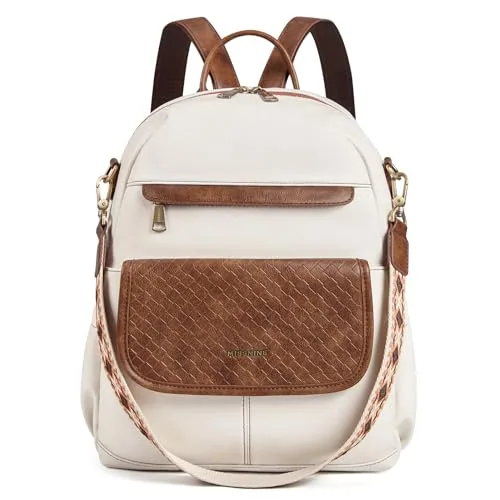
Convertible Vegan Leather Backpack Purse, 13 inch laptop III, Coffee
vegan leather · 5.1 × 12 × 14.4 in · 13" laptop
4.3 out of 5 from 355 ratings
$13.99
One colourway
Backpack purses and the small aircraft
On a regional aircraft the overhead bins are small, and Delta's line about personal items fitting securely under the seat or in the bins is aimed there. A backpack purse is the bag for that flight: it stands up, it has a flat back, and it carries a 13 inch laptop on the larger Missnine sizes. The straps stow, so it passes as a purse at the gate and rides on the back through the terminal.
What a backpack purse will not do is take a full-size laptop or a change of clothes. The heights on this bench run twelve to fourteen inches, and a fourteen-inch bag is a day bag. For a longer trip it is the personal item beside a carry-on, not instead of one.
Missnine backpack purses with a laptop sleeve
Convertible Vegan Leather Backpack Purse, 13 inch laptop, Beige
vegan leather · 5.1 × 12 × 14 in · 13" laptop
4.3 out of 5 from 355 ratings
$31.99
Available in 2 colours
Convertible Vegan Leather Backpack Purse, 13 inch laptop III, Coffee
vegan leather · 5.1 × 12 × 14.4 in · 13" laptop
4.3 out of 5 from 355 ratings
$13.99
One colourway
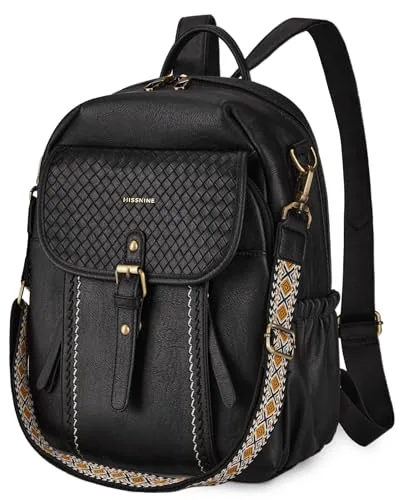
Convertible Vegan Leather Backpack Purse, 13 inch laptop II, Black
vegan leather · 5.5 × 10.5 × 14 in · 13" laptop
4.6 out of 5 from 310 ratings
$23.99
One colourway
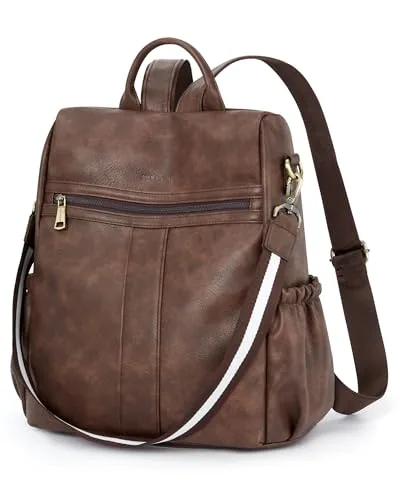
Convertible Vegan Leather Backpack Purse, 13 inch laptop IV, Coffee
vegan leather · 5.9 × 12 × 14.2 in · 13" laptop
4.4 out of 5 from 291 ratings
$22.79
One colourway
The lightest bags that pass
Weight is the fact most bag pages leave out and most travellers regret leaving out. The four below are the lightest Missnine bags with a size on the page that sit inside 18 by 14 by 8, by the maker's empty weight.
The lightest Missnine bags inside the number
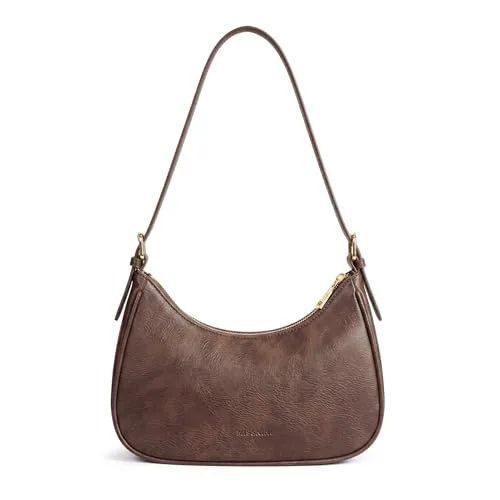
Vegan Leather Shoulder Bag II, Dark Brown
vegan leather · 9.1 × 3.4 × 8.3 in
4.5 out of 5 from 4 ratings
$19.99
One colourway
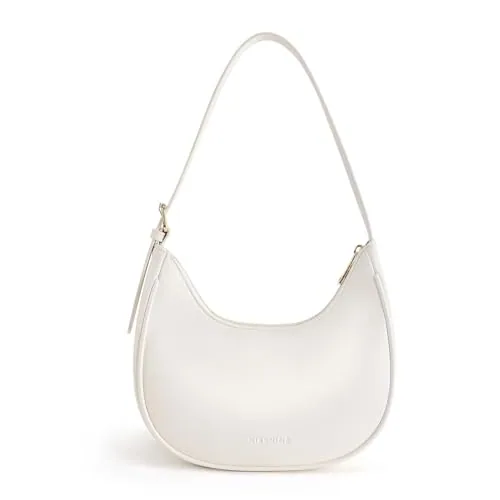
Mini Vegan Leather Clutch, White
vegan leather · 9.1 × 3.4 × 8.3 in
3.6 out of 5 from 6 ratings
$10.28
One colourway
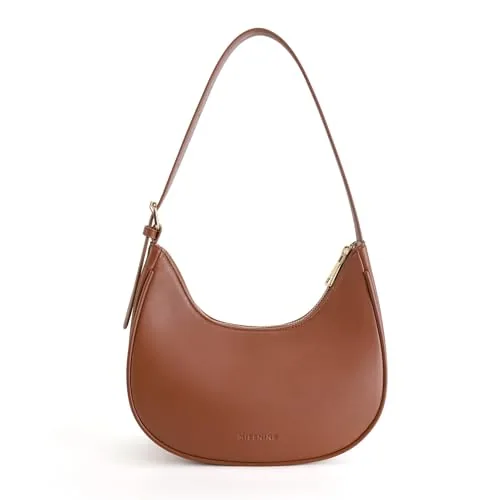
Vegan Leather Shoulder Bag III, Brown
vegan leather · 9.1 × 3.4 × 8.3 in
4.1 out of 5 from 5 ratings
$9.99
One colourway
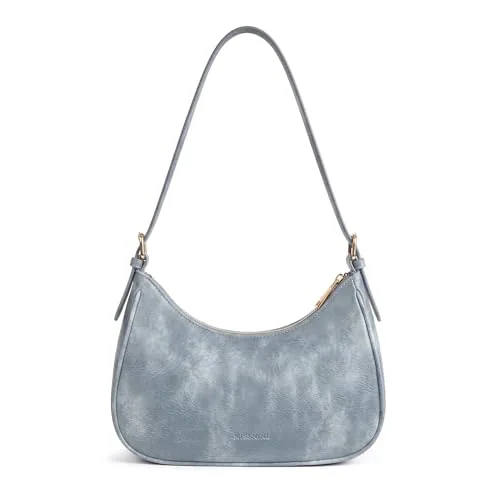
Vegan Leather Shoulder Bag IV, Blue
vegan leather · 9.1 × 3.4 × 8.3 in
5.0 out of 5 from 1 ratings
$19.99
One colourway
Packing the personal item for a day trip
A day trip is the flight with no carry-on at all, and the personal item does every job. The Missnine way to pack one starts from the seat, not from the list. Under the seat there is room for a bag eighteen inches long and eight deep, and inside that bag there is room for exactly what a day needs.
- The laptop, in the sleeve. Screen towards the back of the bag, charger in the pocket beside it, not loose in the main room where it scratches the lid.
- The bottle, empty. Security takes a full one. An elastic side pocket on the canvas totes holds an empty bottle upright, and the airport fountain fills it.
- The small bag inside. A crossbody or a phone purse with the wallet, the passport and the phone, so the big bag can go under the seat while the small one stays on the lap.
- One layer, folded flat. Cabins are cold, and a folded cardigan is the flattest thing in the bag. It goes on top, so it comes out first.
- Nothing that rolls. A bag pushed in on its side tips everything to one end. Zip pockets for the pens and the lip balm, and the zip closed before the bag goes under.
Packed like that, a 15.6 inch laptop tote from the Missnine range stays inside the eight-inch depth, because the bottle and the layer are flat and the laptop is the thickest thing in it. Packed with a second pair of shoes it does not, and no guide can help with that.
The second bag inside the first
The airlines count bags at the gate, and a crossbody inside a tote is one bag until you take it out. That is the arithmetic behind carrying a small Missnine crossbody inside the laptop tote. Through the gate it is one personal item. On the plane it comes out and sits on the lap with the phone and the wallet. At the far end it is the bag for the evening while the tote stays in the hotel.
The crossbody has to be small for this to work, under eleven inches long and under two inches deep when it is empty, so that it lies flat against the laptop sleeve without breaking the eight-inch depth of the outer bag. The crossbody bench prints the three numbers on every page, and most of the bench passes.
What it will not do is carry a second laptop or a camera. It is the bag for the things you touch in the air, and that is the whole reason it goes inside the first one.
What the guide cannot tell you
It cannot tell you the seat pitch of the aircraft you will fly, and it cannot promise that a bag inside the number will fit under a seat with an entertainment box beside it. The airline pages quoted above are dated at the bottom of this page, and airlines change them. Read yours before the flight, and read the basic economy rules on the same page, because on some fares the personal item is the only bag allowed at all.
What it can tell you is the size of every Missnine bag in inches, the laptop each sleeve takes, and the weight empty. Those three numbers, against the airline's one, are the whole method.
Missnine crossbody bags, the second bag inside the first
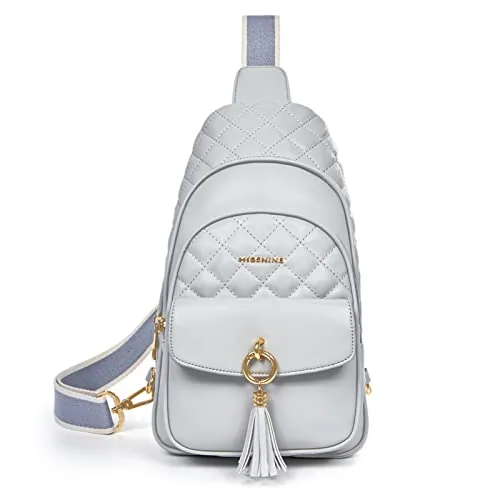
Vegan Leather Sling Bag, tassel, Grey
vegan leather · 8.2 × 3.7 × 12.9 in
4.5 out of 5 from 511 ratings
$6.99
One colourway
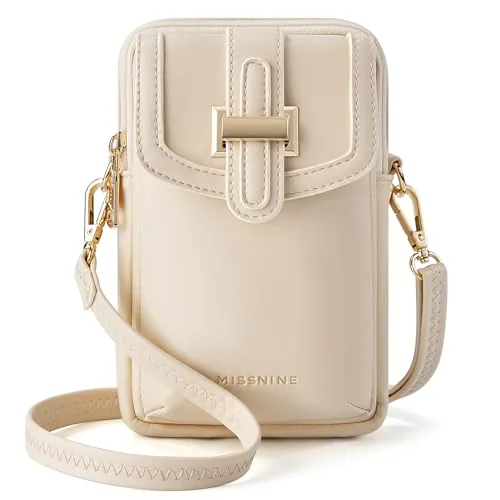
Convertible Vegan Leather Phone Crossbody, Stylish Beige
vegan leather
4.3 out of 5 from 401 ratings
$7.99
One colourway
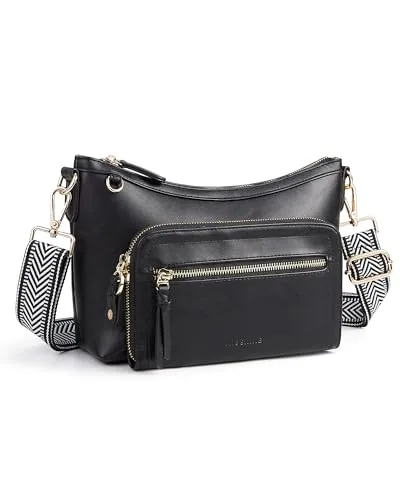
Vegan Leather Crossbody Bag, Black
vegan leather · 11 × 1.1 × 7.8 in
4.5 out of 5 from 323 ratings
$9.99
One colourway
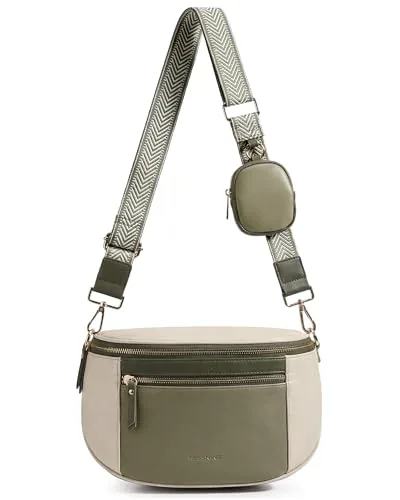
Vegan Leather Sling Bag, Green
vegan leather · 10.2 × 4.3 × 8.3 in
4.5 out of 5 from 323 ratings
$7.99
Available in 2 colours
Sources
- Carry-on bags and size limits, American Airlines, read 4 September 2026
- Carry-On Baggage, Delta Air Lines, read 4 September 2026